
“Is liposuction in Thailand safe?” is a reasonable question asked in an unhelpful shape. Safety is not a property of a country.
For this operation it belongs to a specific set of decisions: how much is removed, how many areas at once, who administers the anaesthetic, and who is watching you in the hours afterwards. Those decisions vary far more between clinics than between countries.

Volume and area count are the real variables
If you take one thing from this page, take this: the scale of the operation drives the risk more than the technique or the destination.
Liposuction infiltrates a large volume of fluid, removes fat and blood, and creates a wide raw surface beneath the skin. Do that across one area and the body absorbs it easily. Do it across many at once, at high volume, and you are asking considerably more of the circulation.
This is why surgeons work to a limit on a single session, and why an experienced one may propose staging your areas across two occasions instead of one.
A clinic that agrees to treat everything at once, without discussing a limit, has removed the main safeguard for the sake of the booking.
The risks, and what reduces them
Every operation carries risk. These are the ones that belong specifically to body contouring, set out plainly rather than reassuringly.
| Risk | What it means | What reduces it |
|---|---|---|
| Contour irregularity | Lumps, ridges or dips where removal was uneven | Surgeon judgement; garment compliance; not over-treating |
| Blood clots | Clot in a leg vein, which can travel to the lungs | Early walking; limiting operating time; care around flights |
| Fluid imbalance | Too much infiltrated or too much removed at once | Volume limits; monitoring during and after surgery |
| Infection | Uncommon, but significant across a wide treated area | Sterile facility; wound care; reporting symptoms early |
| Seroma | A collection of fluid under the skin afterwards | Compression; drainage if it develops |
| Skin or nerve injury | Burns, altered sensation or damage to overlying skin | Technique and experience; correct energy settings |
| Loose skin | Skin that does not retract onto the smaller contour | Honest assessment beforehand of skin quality |
The first row is by far the most common reason people seek revision. It is a result problem rather than an emergency, and it originates in decisions made during the operation.
The Aesthetic Society publishes patient safety information on aesthetic surgery covering the same ground from a surgical perspective.
“While I am here” is not a clinical reason
The temptation is understandable. You have travelled a long way, you are already booked, and adding another area or another procedure seems efficient.
It is the single most common way a straightforward plan becomes a risky one. More areas means more fluid, more time under anaesthetic, more raw surface and a longer immobile period before you fly.
Combining liposuction with a separate operation compounds it further, because the risks do not simply sit side by side; the anaesthetic time and the total surgical load add up.
Decide the plan when you are not in a gown. If an addition is proposed on the day, it is entirely reasonable to say you will think about it and return.

What Thai regulation covers, and what it does not
Doctors here are licensed by the Medical Council of Thailand, and plastic surgery is a recognised specialty with its own board qualification. That is a real check and verifying it is the first thing worth doing.
The Council’s rules also restrict advertising, which is why this practice publishes no before-and-after photographs. Patients from countries where galleries are routine often read that as evasiveness when it is compliance.
What regulation does not do is guarantee that a particular clinic is a good choice, any more than it does anywhere else. It sets a floor, and checking the surgeon and the facility remains your work, as choosing a surgeon for liposuction in Thailand sets out.

What travelling adds
Travelling does not make the operation less safe. It changes who is nearby afterwards, and it introduces pressures worth naming.
The first is time. A trip built around fixed flights creates pressure to proceed on schedule and to fly before you are cleared, and immobility after this particular operation is not a trivial matter.
The second is that the complications most likely to matter — a seroma, an infection, an uneven contour — tend to declare themselves in the weeks after you land rather than while you are still here.
Both are planning problems rather than surgical ones, and both are solved before you travel rather than afterwards.
Who is watching you afterwards
The published guide for this procedure includes a day in hospital, and that day is not a formality.
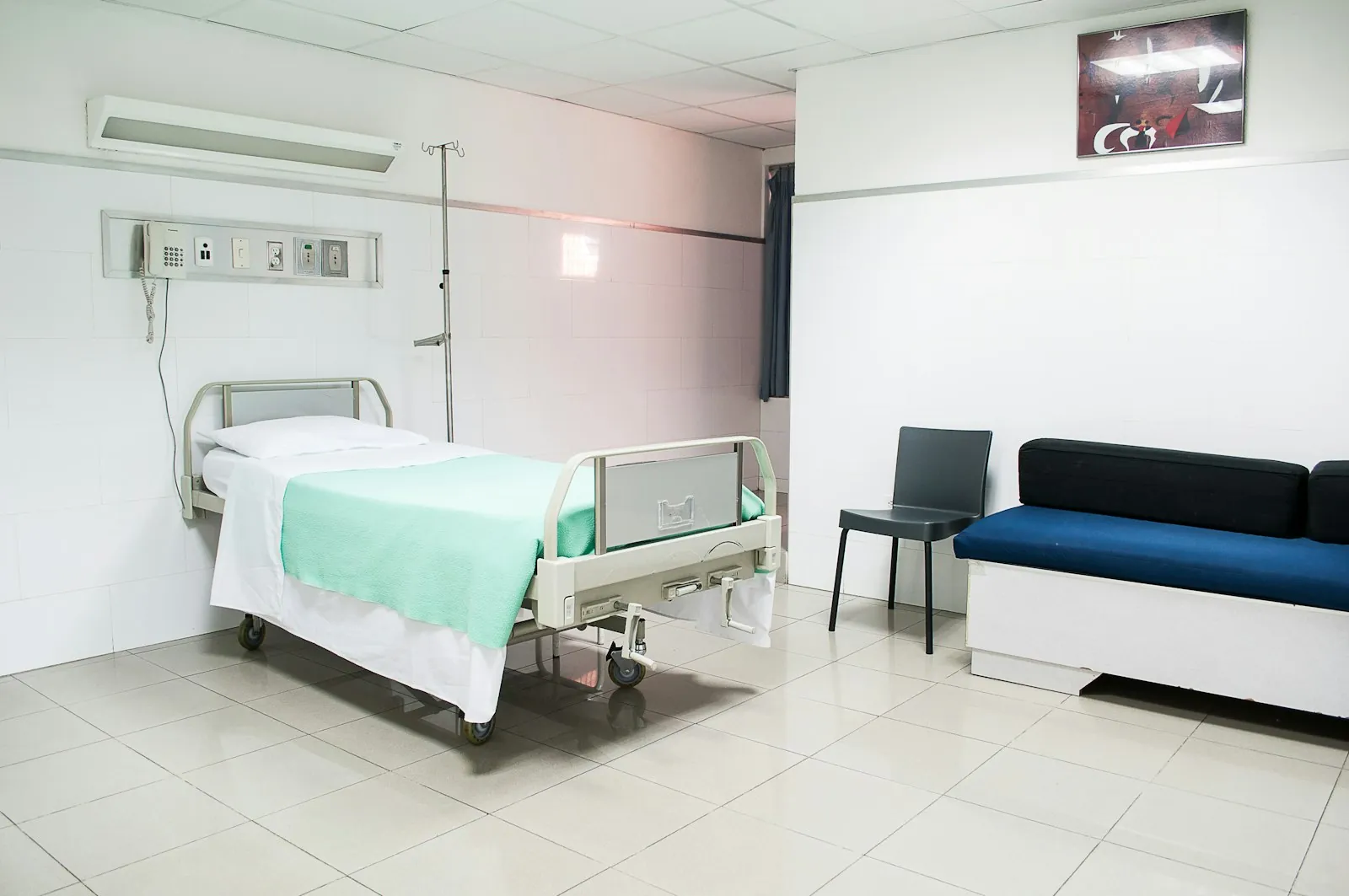
The hours immediately after surgery are when fluid shifts, bleeding and reactions to the anaesthetic would show themselves. Being somewhere staffed and equipped during that window is a large part of what makes the operation safe.
So ask three specific questions: where you will spend the first night, who is present overnight, and what happens if you needed to be admitted to a hospital unexpectedly.
Be wary of any arrangement that sends you straight back to a hotel alone after a substantial multi-area procedure. That is a cost decision rather than a clinical one, and it moves the risk onto you.
How to reduce your own risk
- Verify the surgeon’s licence and board qualification independently.
- Ask what volume limit they work to, and how your plan sits against it.
- Accept staging if it is offered rather than pressing for one session.
- Disclose your full medical history, medication and supplements.
- Stop smoking for as long beforehand as you are advised.
- Walk early and often, exactly as instructed.
- Allow more time in Thailand than the minimum quoted.
What each of the weeks afterwards involves is set out in liposuction recovery stage by stage.
Questions people ask
Is liposuction riskier than other cosmetic surgery?
It depends almost entirely on scale. A single small area is a modest procedure; extensive multi-area work at high volume is a major one, even though both are called liposuction.
What should make me seek help urgently?
Increasing rather than easing pain, fever, spreading redness, discharge, or a rapidly enlarging area. Breathlessness, chest pain or calf pain and swelling need immediate local attention wherever you are.
Can fat be moved elsewhere at the same time?
Fat transfer is a separate procedure with its own risk profile, and grafting to some sites carries markedly more risk than others. Treat it as a distinct decision requiring its own discussion, not an add-on.
How do I check this practice?
Dr Witoon’s registrations and licence number are published so they can be verified, and the clinic contact details cover both locations.
Medical information notice. This page is general information. It is not medical advice and does not replace consultation with a qualified medical professional. All surgery carries risk; suitability, recovery and results vary from person to person and are determined by individual medical assessment.