
Search for an alternative to upper eyelid surgery and the results divide neatly into two groups: pages selling a device, and pages selling an injection.
Both skip the same question. What is causing your heavy eyelid, and can the thing being advertised reach it? Answer that and the list of genuine alternatives becomes short and much easier to judge.
Match the option to the cause
Surgery removes surplus skin and sets a crease. Every alternative is judged by whether it can do anything about the tissue that is actually responsible.
| If the cause is | Non-surgical options can | Only surgery can |
|---|---|---|
| A fold of surplus skin | Nothing meaningful; skin is not removed without cutting | Remove the fold |
| A low brow | Raise the brow modestly, temporarily, with injections | Reposition the brow lastingly |
| A drooping lid margin | Nothing; this is a muscle problem | Address the lifting mechanism |
| Mild skin crepiness only | Modest tightening in well-chosen cases | Not necessarily needed at all |
| Puffiness from fat | Little; fat is not dissolved safely here | Address it during surgery |
| No visible crease | Nothing lasting | Create or define a crease |
The first row is the one that matters, because surplus skin is why most people are reading this. Which applies to you is an examination finding, as who is a candidate for upper eyelid surgery explains.

A phrase worth distrusting
“Non-surgical blepharoplasty” appears constantly and describes no single treatment.
It is a marketing category covering injections, energy devices, threads and plasma treatments, grouped by what they promise rather than by what they do.
The word blepharoplasty means removing tissue from the eyelid. Any treatment that does not do that is not a version of it, however the page is titled.
That is not an argument against these treatments. It is an argument for asking what a particular one does to your particular problem, rather than accepting the category.
Injections that lift the brow
This is the alternative with a genuine, if narrow, use, and it is the one most often misdescribed.
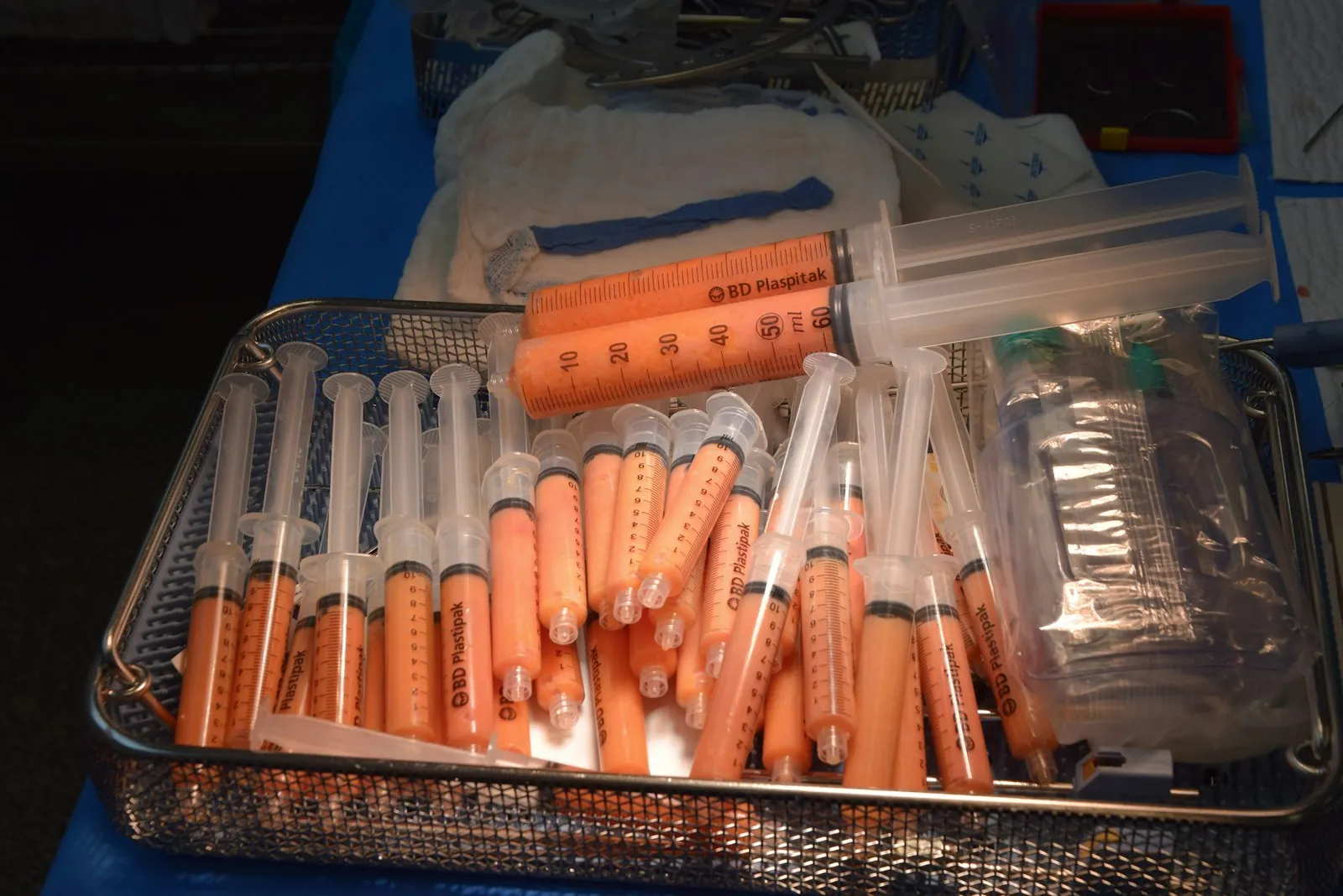
Relaxing the muscles that pull the brow down can let it sit slightly higher, which lifts some of the skin above the eye with it. Where a low brow is contributing, that is a real if modest effect.
What it does not do is remove eyelid skin or raise a drooping lid margin. It also wears off, so the result is repeated rather than kept, and badly placed injections can lower a brow rather than raise it.
Worth trying where the brow is the issue and you would rather not have surgery. Not a substitute where a fold of skin is sitting on your lashes.

Energy and plasma treatments
These are the most heavily promoted alternatives and the ones that need the most caution, because the treatment area is millimetres from the eye.
Radiofrequency and similar treatments heat tissue to stimulate collagen and can produce a modest tightening in someone with mild laxity and good skin quality. Plasma treatments work by creating small controlled injuries to the skin surface, which then contracts as it heals.
The tightening they achieve is measured in a very small amount of skin, results are temporary, and downtime is not trivial: plasma treatment leaves visible marks and crusting for a period.
The British College of Aesthetic Medicine publishes guidance on standards in non-surgical aesthetic treatment and who should be performing it, which is the more useful question here than which device is used.

Non-surgical does not mean risk-free
This is the part omitted from most comparison tables, and it is the reason to ask who is holding the device.
Treatments applied to eyelid skin can cause burns, pigment change, scarring and prolonged swelling, and the eye itself must be protected throughout. Injections around the eye can cause temporary drooping of the lid or the brow.
None of that means these treatments are unsafe in careful hands. It means the qualification of the person performing them matters as much as it does for an operation, and is asked about far less.
Ask what training they hold, what happens if something goes wrong, and who manages a complication involving the eye.
The options nobody advertises
Three reasonable answers to “what else could I do” involve no treatment at all.
Treat the dry eye first. If your eyes are already dry, that is worth addressing on its own terms. It also changes the surgical assessment, so it is not time wasted.
Change how you frame the eye. Glasses, brow shape and where make-up is placed all alter how heavy a lid reads, and none of them is permanent.
Do nothing, for now. A heavy upper lid that bothers you occasionally is not a condition requiring treatment, and a decision that survives six months is a better decision.
Questions that separate a claim from a result
Ask these of anyone proposing a non-surgical treatment for a heavy upper lid. The answers are more revealing than any brochure.
- Which tissue is causing my problem, and does this treatment reach it?
- How much improvement is realistic, described in what I would actually see?
- How long will it last, and how often would I repeat it?
- What is the downtime, and what will I look like during it?
- What are the risks to the eye, and how is it protected?
- Who performs it, what are they qualified in, and who manages a complication?
- If it does not work, what have I lost besides the fee?
The first question does most of the work. Anyone who cannot name the tissue they are treating is selling a treatment rather than assessing a problem.
Comparing on the right terms
These options are usually compared on downtime, price and whether there is a scar, which is understandable and mostly beside the point.
The comparison that predicts satisfaction is narrower: can this reach the tissue causing the appearance you dislike, and for how long?
A treatment that must be repeated twice a year for a decade is not obviously cheaper than an operation, and a treatment that cannot reach your problem is not cheaper at any price.
Then ask what will not improve either way. That answer, given plainly, is worth more than any list, as what happens at an upper eyelid surgery consultation describes.
Questions people ask
Can anything remove eyelid skin without surgery?
No. Treatments applied to the surface can tighten skin to a limited degree, but removing a fold of surplus skin means excising it. That is the line between the two categories.
Would a brow lift be the alternative instead?
It is a different operation rather than a lesser one, and it suits a different cause. Which applies depends on where your heaviness comes from, and the practice lists endoscopic brow lift separately for that reason.
How long do non-surgical results last?
Months rather than years for most of them, and the tissue continues to age underneath. Ask for that figure specifically before comparing prices, because it changes the comparison entirely.
How do I find out which applies to me?
Be examined, and ask what the alternatives are including doing nothing. Much can be discussed in advance, as remote consultations before travelling for surgery explains, and the clinic contact details cover both locations.
Medical information notice. This page is general information. It is not medical advice and does not replace consultation with a qualified medical professional. All surgery carries risk; suitability, recovery and results vary from person to person and are determined by individual medical assessment.