
Almost everyone asks whether cabin pressure will damage a healing nose. It is the wrong question, and it crowds out the right one.
What actually decides when you fly is the splint: whether it is off, whether the nose underneath it has been looked at, and whether anyone has confirmed there is no bleeding.

Cabin pressure, honestly
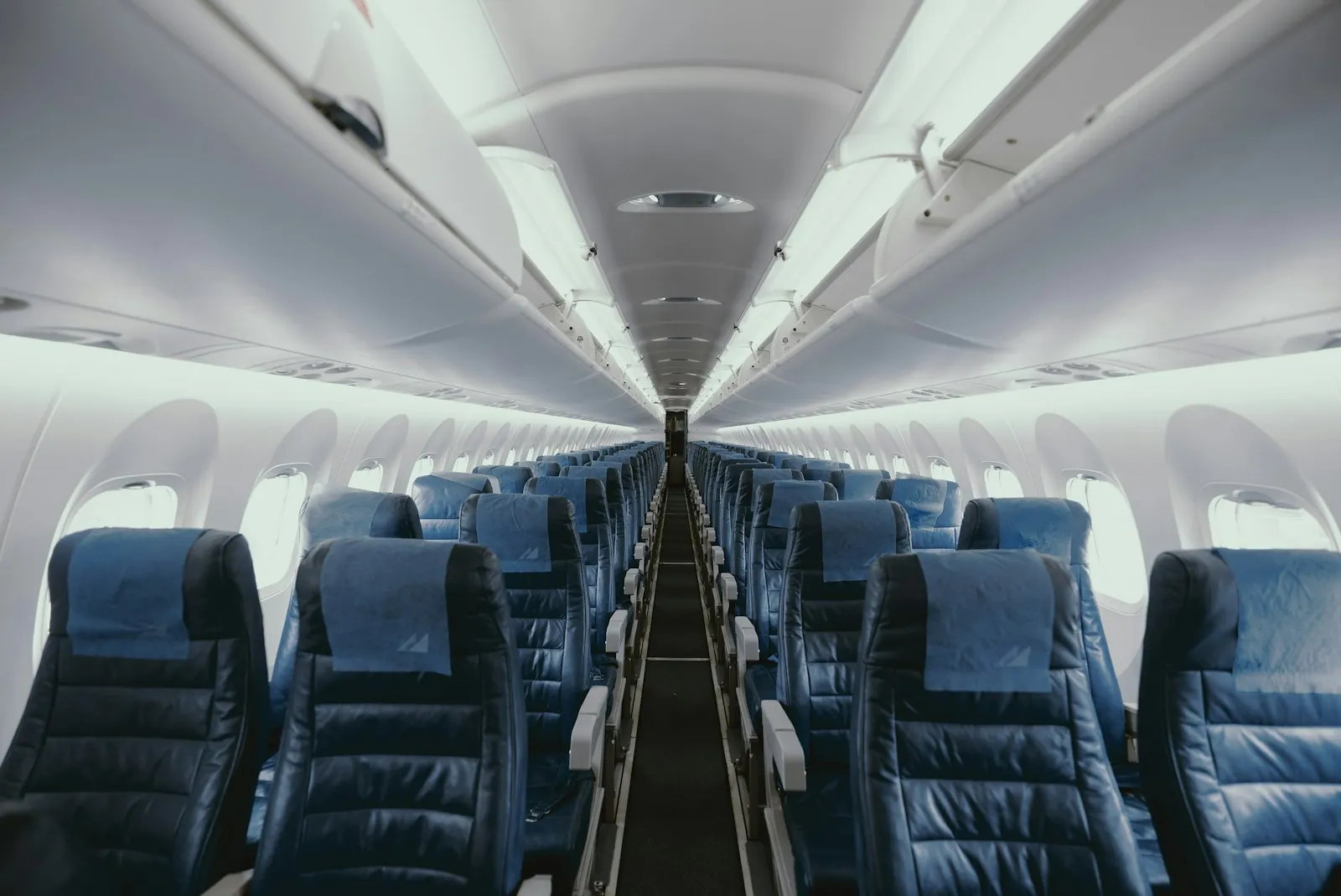
Commercial cabins are pressurised to roughly the equivalent of six to eight thousand feet, which is a modest change and one that healing facial tissue tolerates.
What passengers actually notice on ascent and descent is pressure equalising through the sinuses, and a nose that is packed, swollen or congested equalises less comfortably than usual.
Uncomfortable is not the same as unsafe. The concern is a bad few minutes and a strong urge to blow your nose, which is exactly what you have been told not to do.
The Aerospace Medical Association publishes guidance on medical considerations for air travel, which is a useful reference for how the cabin environment affects passengers generally.
The splint sets the date
An external splint usually stays on for about a week, and its removal is a clinic appointment rather than something you do yourself.
That appointment is also where the nose is examined, any internal splints or sutures are dealt with, and bleeding and infection are ruled out.
Flying before it means leaving the country with an unexamined nose and an appliance on your face that nobody at home fitted.
Build the trip around that review. Everything else about the journey is comfort; this part is care.

What the cabin actually does to a healing nose
| Factor | What it does | How much it matters |
|---|---|---|
| Very dry air | Dries the nasal lining, thickens secretions, crusting worsens | The main nuisance on a long flight |
| Pressure changes | Sinuses equalise less easily while swollen | Uncomfortable on descent, usually brief |
| Hours sitting still | Raises clot risk, which surgery raises further | Matters more on long-haul than short |
| Sleeping upright | Actually helpful, as elevation reduces swelling | A small advantage of the aisle seat |
| Knocks and bags | A bumped nose is the real physical risk | Highest in boarding crowds and overhead lockers |
| Recycled air and crowds | Ordinary exposure to coughs and colds | A cold with a blocked nose is miserable now |
Row five is the one nobody plans for and the only one that can undo surgical work. Protect your face in the aisle.

Making the flight tolerable
- Whatever spray or ointment you were given, in hand luggage, not the hold.
- Water, and more of it than usual, since the air is drier than anywhere you live.
- An aisle seat, so standing and walking do not require negotiation.
- A neck pillow, which keeps your head up and off a seatback.
- Tissues for dabbing, on the clear understanding that you are not blowing.
- Your written instructions, including who to call and what counts as urgent.
Ask before you fly whether you may use a saline spray during the flight, since that single answer makes more difference to the journey than anything else on the list.
Sitting still for hours
Rhinoplasty is not abdominal surgery and the clot risk is lower, but it is not nothing, and long-haul flights lengthen the exposure.
Walk the cabin when it is safe to, move your ankles while seated, and drink water rather than alcohol.
Ask directly whether compression stockings are advised for your flight length and your own risk factors, rather than assuming they are only for bigger operations.
Give your surgeon the real itinerary, including connections. Two flights and a five-hour layover is not the same journey as one direct leg of similar total length.
You will not look ordinary yet
Bruising around the eyes is common after work on the nasal bones, and it is at its most colourful in the first week.
By the time the splint is off, most people are presentable rather than unremarkable, and the tip stays swollen for a good deal longer than that.
Sunglasses help at the airport, but resting heavy frames on the bridge is a separate question with its own timeline. Ask when spectacles may sit on the nose again.
If you wear glasses daily, raise it before surgery rather than at the departure gate, as how to prepare for rhinoplasty explains.
Security, immigration and a swollen face
This is the part of the journey nobody warns patients about, and it is entirely manageable once you expect it.
You will be asked to remove sunglasses at passport control, and automated gates compare your face with a photograph taken before any of this happened.
Swelling and bruising can be enough for a machine to decline the match, which simply means being directed to a staffed desk. It is routine, not suspicion.
Allow extra time, keep your medication and any written instructions accessible rather than buried, and carry liquids in line with the usual security rules so nothing you need is confiscated at the checkpoint.
When not to get on the plane
A short list, worth knowing before you are standing in a departure hall deciding alone.
Bleeding that has not settled, a fever, spreading redness, discharge, or pain that is increasing rather than easing all mean being seen before travelling rather than after landing.
Breathing that is getting worse rather than better belongs in the same category, and so does anything your surgeon specifically told you to report.
A changeable ticket turns all of that into an inconvenience instead of a decision made against your own interests.
Planning the return leg
- Ask for the earliest sensible flying date at the consultation, not afterwards.
- Put the splint review before the flight, with a clear day between them.
- Add two spare days, because instructions to wait do happen.
- Choose a changeable fare even where it costs more.
- Confirm what to do in the air if your nose bleeds mid-flight.
Point five sounds unlikely and is the question people most wish they had asked, since the answer is simple and impossible to improvise at altitude.
Questions people ask
Will the pressure change ruin my result?
Pressure is not the thing that shapes your nose; cartilage, healing and time are. The reason to wait is the review appointment and the wound, not the aeroplane.
Can I fly with the splint still on?
That is a question for your surgeon and not a general rule. The point of waiting is being examined before you leave, so ask what the plan is if your dates are fixed.
What if my nose bleeds on the plane?
Ask for specific instructions before you fly, including whether to pinch, how long, and when to tell the cabin crew. Take that answer with you in writing.
Who signs off that I can travel?
The practice that operated, at the review appointment, reached through the clinic contact details. What the weeks after look like generally is set out in rhinoplasty recovery stage by stage.
Medical information notice. This page is general information. It is not medical advice and does not replace consultation with a qualified medical professional. All surgery carries risk; suitability, recovery and results vary from person to person and are determined by individual medical assessment.