Most people planning surgery abroad ask how many nights they need. For rhinoplasty that is the easy question, and answering it alone is how trips go wrong.
The hard question is what happens at twelve months, when the result finally arrives and you are eight thousand kilometres away.

Three timescales, not one
| Clock | What it governs | Roughly how long | What it decides |
|---|---|---|---|
| Clinical | Splint removal, wound check, clearance to fly | About a week | The earliest you may travel |
| Social | Bruising around the eyes, obvious swelling | Two to three weeks | When you are willing to be seen |
| Result | Swelling resolving, the tip refining | Six to twelve months and beyond | When the outcome can be judged |
The trip is booked on the first, the leave is booked on the second, and almost nobody plans for the third. The third is the one that needs an appointment.

Settle the operation before the flights
Rhinoplasty is not one operation, and the version you need changes where it happens and how long you stay.
A straightforward augmentation is carried out at the clinic. A plan that needs rib cartilage moves to a hospital with an overnight stay.
That is a finding from your assessment rather than something you choose, and it is worth discussing before anything is booked, as what happens during rhinoplasty describes.
Ask what happens to the plan if the examination in person changes the answer, because that is a real possibility and a good practice will have thought about it.
Settle these before booking anything
- Which operation is planned, and would it be at the clinic or a hospital?
- How long should I stay, for that specific plan?
- When is the splint removed, and who removes it?
- Will anything be implanted, and what material?
- Who reviews me at six and twelve months, and how?
- Can my return flight be changed, and at what cost?
The fifth is the one specific to this operation and the one almost never asked, because it concerns a date long after the traveller has stopped thinking about the trip.

Apply your own country’s standards here
Consumer protection does not travel with you. The standard you would apply at home does, and carrying it costs nothing.
The International Society of Travel Medicine publishes resources on health risks associated with travel, including travel undertaken for medical treatment, which is a useful counterweight to package marketing.
By that standard, a practice that publishes verifiable registration, insists you meet the operating surgeon, describes limits as readily as possibilities and declines to advertise results is behaving as you would expect at home.
How to weigh those signals is set out in choosing a surgeon for rhinoplasty in Thailand.
You will fly home looking like this
Worth stating plainly, because the operation is short and people assume the visible aftermath is short too.
Where nasal bones have been worked on, bruising around the eyes is common and at its most colourful in the first week, which is the week the splint is still on.
By two to three weeks most people are unremarkable to strangers. The nose itself is still visibly swollen to you for months after that.
Count backwards generously from anything you must attend looking ordinary, rather than forwards from the operation date.
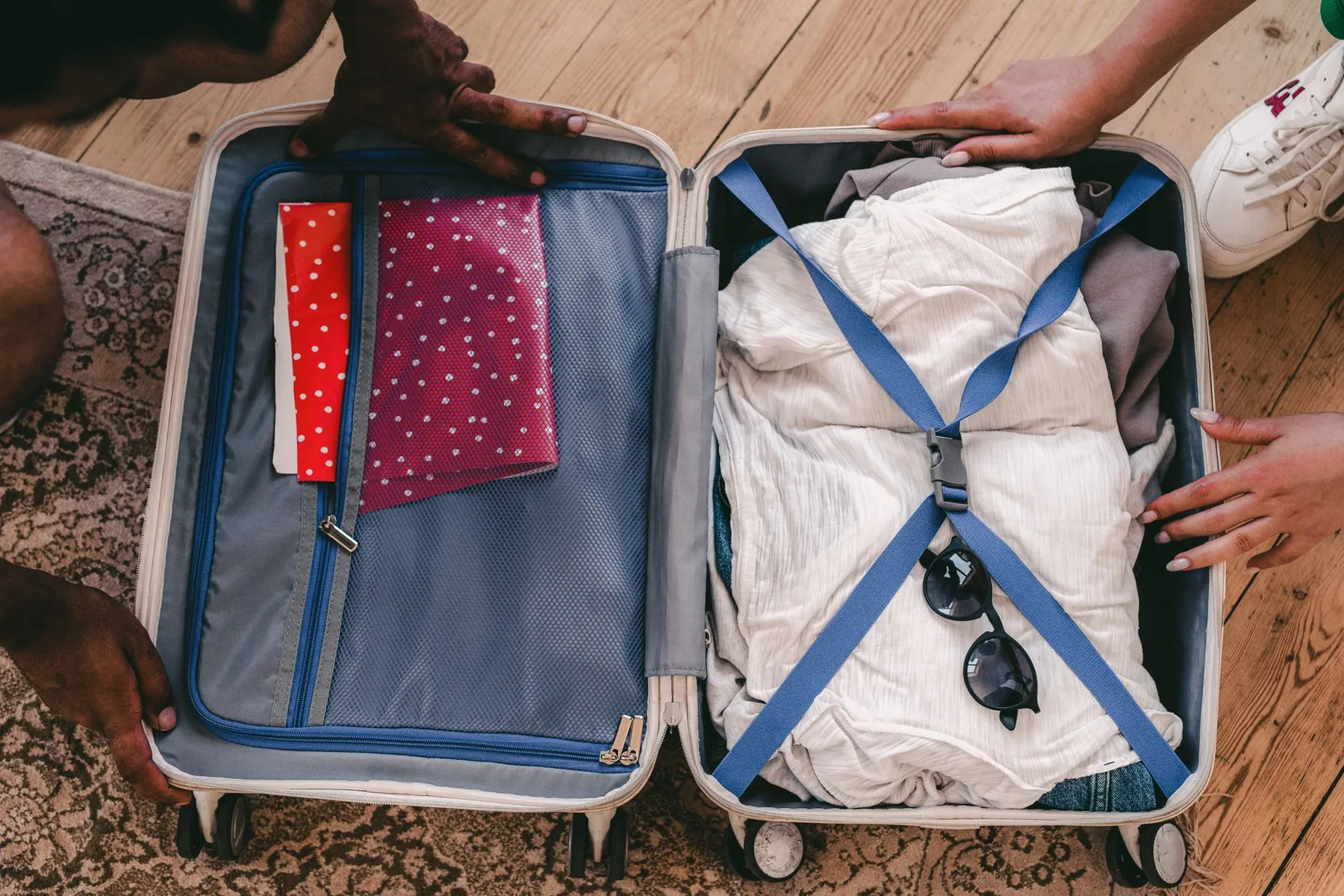
What to pack that you would not otherwise
- Whatever saline or ointment you are prescribed, in hand luggage.
- Contact lenses if you wear them, since glasses stay off the bridge for a while.
- Large sunglasses, for bruising around the eyes rather than for sun.
- A written medication list, including anything taken for years.
- A travel pillow, for sleeping propped up on the way home.
- Photographs of yourself before surgery, straight on and in profile.
The last one costs nothing and settles more later questions than anything else on the list, because you will be comparing against it for a year.
Insurance, and what it usually excludes
Many travel and health policies exclude anything arising from elective treatment overseas, which puts a complication or an advised delay on your account rather than the insurer’s.
Read the wording before you travel, and ask specifically about cover for a delayed return.
Ask your own doctor at home, before leaving, whether they would look at a healing nose or manage an infection. That conversation is much easier in advance than in a crisis.
Take your operation details home in writing, as rhinoplasty aftercare when you live abroad sets out.
The practicalities of the trip
Thailand is three hours behind eastern Australia for much of the year, seven ahead of London and twelve ahead of New York, which matters for arranging calls and for reply times once you are home.
Consultations are by appointment in Bangkok and Chiang Mai, and which suits your dates is confirmed through the clinic contact details. Season is a genuine factor for this operation, as rhinoplasty in Bangkok or Chiang Mai explains.
Much of the history can be settled before you travel, as remote consultations before travelling for surgery describes, though skin thickness and the airway have to be examined in person.
Arrive a day early if you can. Being assessed while tired and puffy from an overnight flight helps nobody on an operation judged in millimetres.
Do not attach a holiday to it
The temptation is obvious, and for this operation it is worse than for most.
Swimming, diving and snorkelling all involve pressure and water where you least want them. Sun falls directly on the skin of the nose, which is healing and prone to darkening.
Add dust, heat and long days outdoors, and a beach week works against the operation at almost every point.
Plan the trip around the clinic and treat a second trip later as the better holiday. The full sequence for any procedure is in how travelling to Thailand for surgery works.
Questions people ask
Can the consultation and surgery be in the same week?
Often, depending on the assessment and your health. Build the trip so that a recommendation to wait, or to treat something first, can be accepted rather than resisted.
Do I need someone to travel with me?
Not necessarily, but you will need someone to take you back on the day, and a blocked nose with a splint on is a good deal easier with company for the first evening.
What if I am told to stay longer?
Plan for it rather than hope against it. A changeable fare and two spare days turn that instruction into an inconvenience instead of a financial decision.
Where is the general information for travelling patients?
The practice’s information for international patients covers the same ground for every procedure, and whether this operation suits you at all is addressed in who is a candidate for rhinoplasty.
Medical information notice. This page is general information. It is not medical advice and does not replace consultation with a qualified medical professional. All surgery carries risk; suitability, recovery and results vary from person to person and are determined by individual medical assessment.