

Upper eyelid surgery has the shortest operating time of any procedure at this practice and one of the most visible recoveries.
That combination catches people out. An hour in theatre suggests something minor; a fortnight of bruising in the middle of your face suggests otherwise. Both are true, and planning around the second is what makes the first go smoothly.

What the practice publishes, and what it does not
The eyelid surgery procedure page publishes a surgery time of about one hour. It also notes something practical that few clinics put in writing: you can wash your face a few hours after the operation.
What it does not publish is a hospitalisation figure or a recuperation period, unlike the abdominal procedures on this site.
That absence is worth reading accurately rather than assuming either way. Eyelid surgery is frequently performed as a day procedure, but whether that applies to you, and whether any overnight stay is planned, is a question to ask directly rather than infer from a website.
Ask it early, because the answer changes what you book.

Recovery stage by stage
These stages are typical rather than promised, and yours will depend on your own healing and on what was done.
| Stage | What is usually happening | What it looks and feels like |
|---|---|---|
| First 48 hours | Swelling building; cool compresses; head kept elevated | Tight, puffy, vision a little blurred |
| Days 3 to 5 | Bruising at its most colourful; swelling starting to turn | The worst it looks; not the worst it feels |
| Days 5 to 7 | Sutures typically removed at a review | A distinct improvement afterwards |
| Days 7 to 14 | Bruising fading; make-up sometimes permitted once healed | Presentable to most people by the end of this period |
| Weeks 3 to 8 | Residual swelling settling; scars pink and softening | Looking like yourself, still refining |
| Months 3 to 6 | Scars fading into the natural crease | The result as it will be |
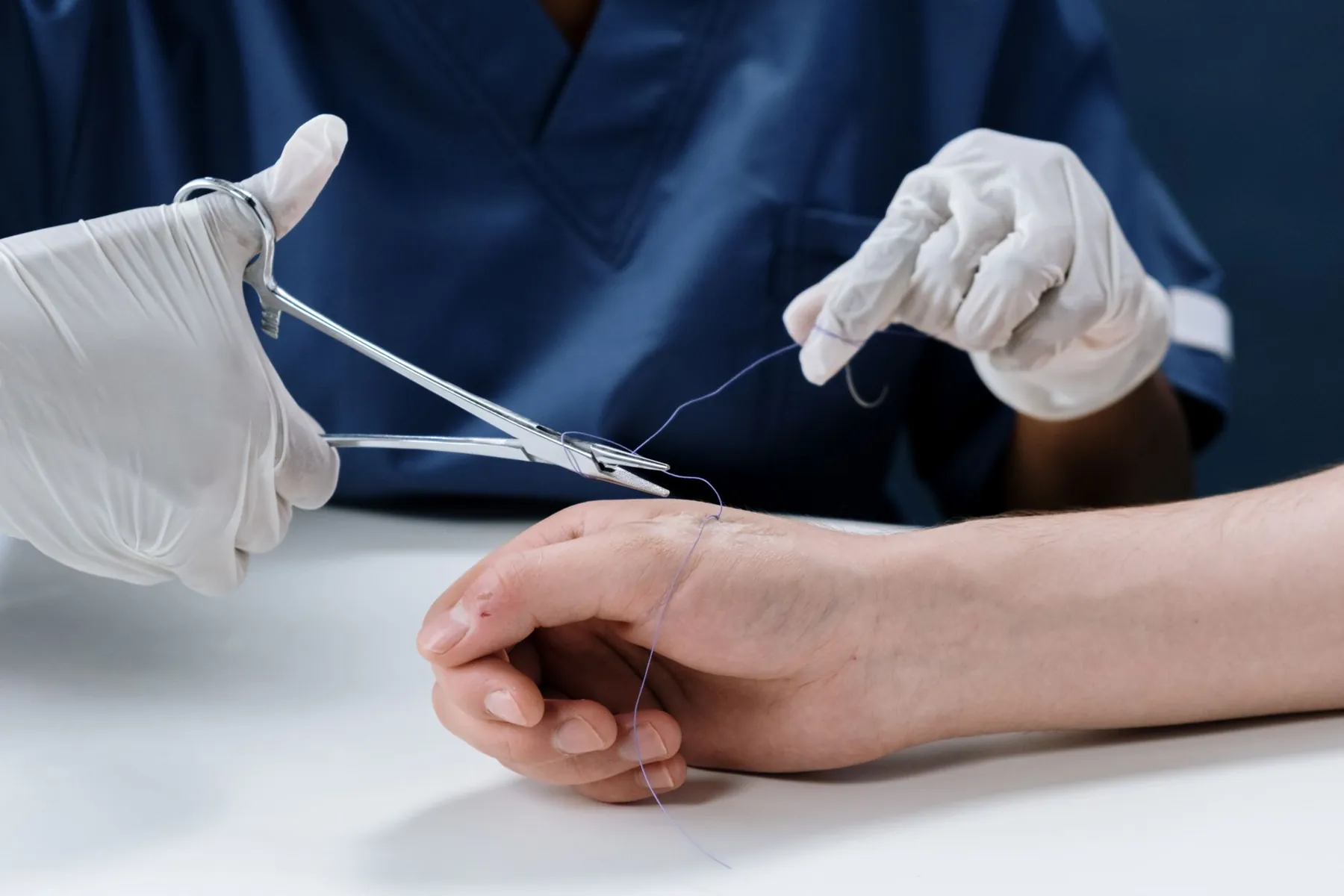
The row that governs a travelling patient’s plans is the third. Sutures come out around days five to seven, and that appointment has to happen somewhere.
The suture appointment decides your trip
This is the single most useful thing to understand before booking flights, and it is specific to eyelid surgery.
Fine sutures in the eyelid crease are commonly removed at around five to seven days. Leaving them longer than intended can mark the skin; removing them yourself is not an option.
So either your trip is long enough to include that appointment, or somebody at home has to do it, and that has to be arranged before you leave rather than discovered afterwards.
Ask which applies in your case, ask what type of suture is being used, and if the answer involves removal at home, book that appointment before you fly out.
Your eyes will not feel normal at first
Several sensations are ordinary in the first days and alarming if nobody has mentioned them.
Vision is often slightly blurred, partly from swelling and partly from ointment. Eyes may feel dry, gritty or unusually sensitive to light, and closing them fully can feel tight while the lids are swollen.
Watering, mild double vision on waking and a stiff, heavy feeling in the lids are all commonly described. Most settle over days to weeks.
What is not ordinary deserves naming: worsening or lost vision, severe pain, a rapidly swelling and hard lid, or bleeding that does not settle. Those need urgent attention rather than patience. The American Academy of Ophthalmology’s patient information on eyelid surgery sets out the same distinction.

Managing swelling and bruising
Most of what helps is unglamorous and works better when prepared in advance.
- Keep your head elevated, including propped up at night for the first days.
- Use cool compresses exactly as instructed, and never ice directly on the skin.
- Use the lubricating drops or ointment you are given, on schedule.
- Avoid bending, straining and heavy lifting, which raise pressure in the head.
- Leave contact lenses out until you are told otherwise.
- Wear sunglasses outdoors, which helps with light sensitivity and with privacy.
Screens are not forbidden, but long unbroken periods of them tend to make dryness worse, since people blink less while concentrating. Breaking up the day and using your drops before the discomfort starts works better than treating it afterwards.
Returning to ordinary life
Return is staged, and the stages are governed less by pain than by pressure, dryness and how visible you are prepared to be.
- Gentle walking is fine almost immediately and helps the swelling settle.
- Reading and screens return quickly, in shorter sessions than usual at first.
- Desk work is usually possible once you are content to be seen.
- Driving waits until vision is reliably clear and you are off strong painkillers.
- Exercise, bending and lifting resume later, on your surgeon’s timetable.
- Swimming, saunas and eye make-up wait for explicit clearance.
Ask for those stages in writing before you fly, and ask specifically about contact lenses if you wear them, since that answer is often longer than people expect.
The climate matters here as well. Sun, glare and air conditioning all make dry eyes more noticeable, and recovering in Thailand covers that side of it.
The social recovery is the real one
Unlike body surgery, this recovery happens on your face, and that changes what “recovered” means in practice.
Physically most people feel well within days. Looking unremarkable to colleagues generally takes seven to fourteen days, and bruising can persist at the edges a little longer, particularly if it tracks downwards.
So plan time off around how visible you are willing to be rather than around how you feel. If you have an event, count backwards generously from it rather than forwards from surgery.
Ask when make-up may be used, since that answer often shortens the social recovery considerably, and it depends on the wound being fully closed.
Questions people ask
Will I stay overnight in hospital?
The practice publishes an operating time but no hospitalisation figure for this procedure, so ask directly rather than assuming. Confirm also who takes you home and stays with you on the first night.
When can I wash my face?
The practice publishes that washing the face is possible a few hours after surgery. Follow the specific instructions you are given about the incisions themselves, which may differ from washing generally.
Will the scars show?
The incision is placed in the natural crease of the upper lid, and the practice publishes that after a few weeks the scars are hardly seen. They are still scars, and they fade over months rather than days.
How long should I stay in Thailand?
Long enough to cover the suture appointment at minimum, and the flight home is its own question. How travelling to Thailand for surgery works sets out the sequence, and the clinic contact details cover both locations.
Medical information notice. This page is general information. It is not medical advice and does not replace consultation with a qualified medical professional. All surgery carries risk; suitability, recovery and results vary from person to person and are determined by individual medical assessment.